Featured case study · Marketing Coordinator, Regional GTM Execution
APAC Co-Viewing Study
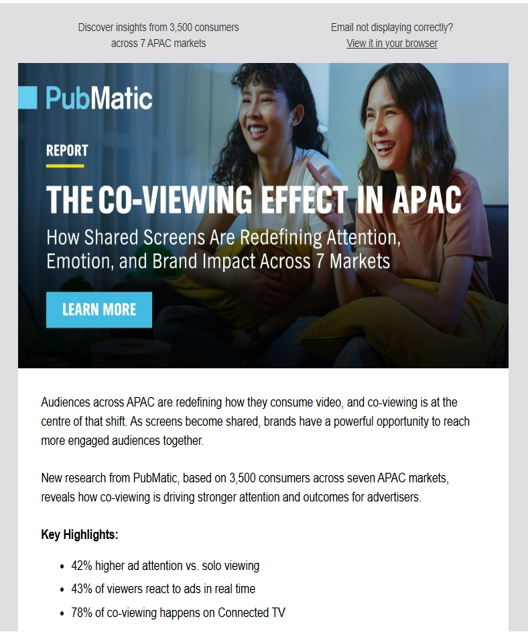
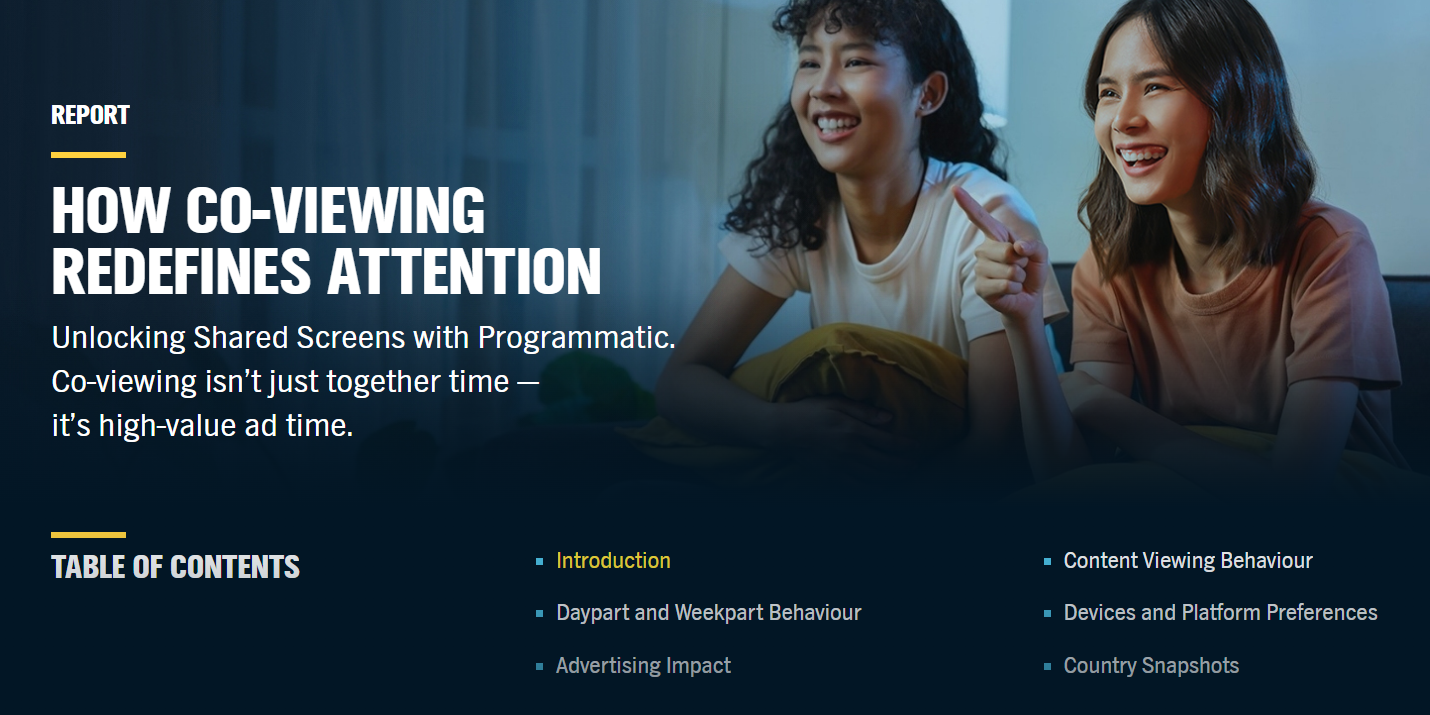
PubMatic's first gated research report for APAC, built to close a thought-leadership gap and turned into qualified pipeline across seven very different markets.
Setup
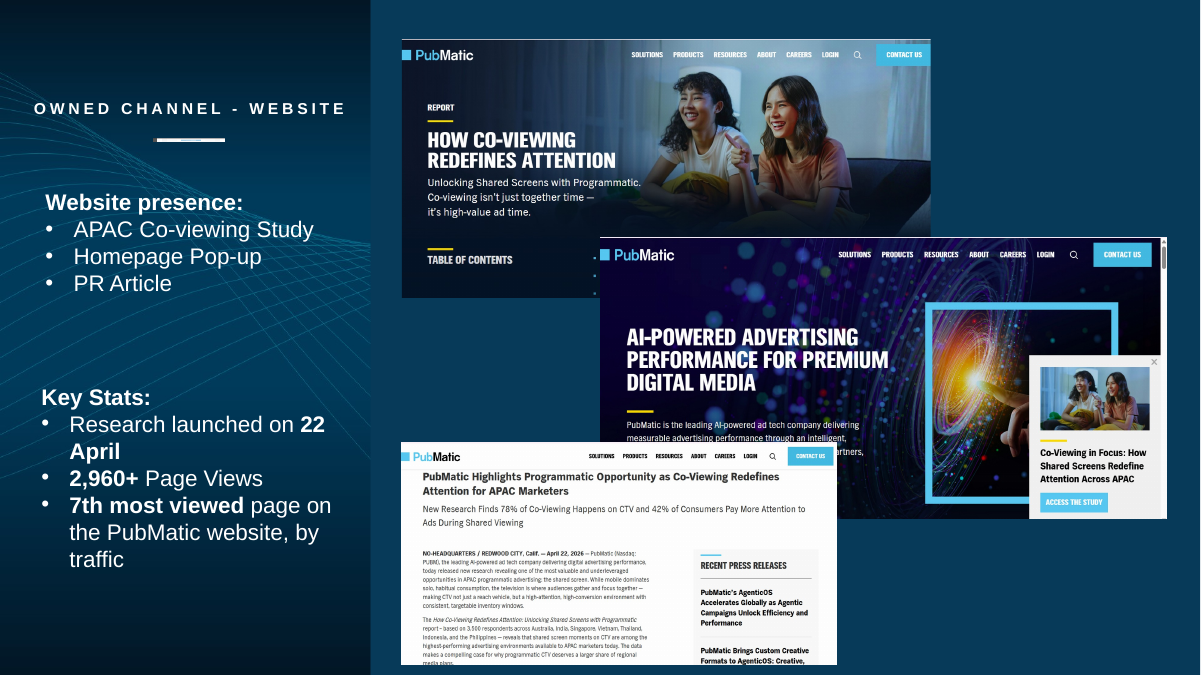
Competitors in the AdTech space were publishing original research and owning the thought leadership conversation in APAC. PubMatic wasn't. This project was built to close that gap: create the company's first gated research report for the region, establish credibility as a subject-matter authority, and generate qualified pipeline across seven markets with very different buying cultures, languages, and media habits.
My contribution
Owned regional go-to-market execution across seven APAC markets, aligning stakeholders in each on timing, messaging, and local relevance.
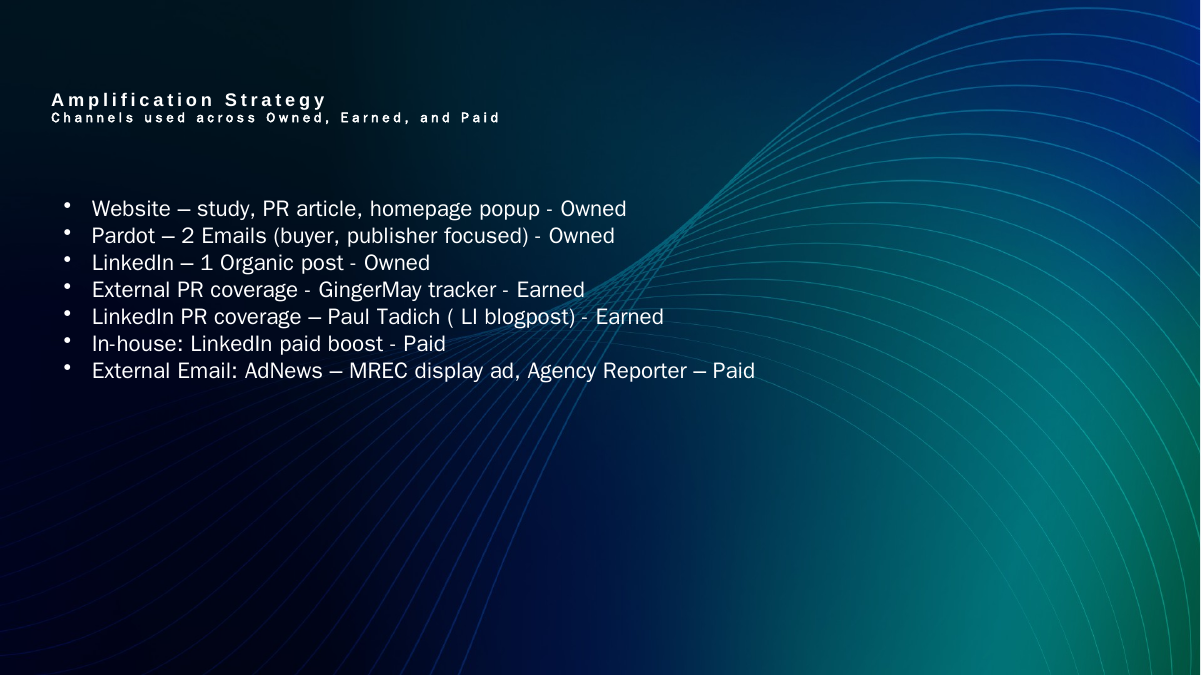
Ran the email program in-house through Pardot, with English and regional-language sends to publishers across Japan, China, and Korea.
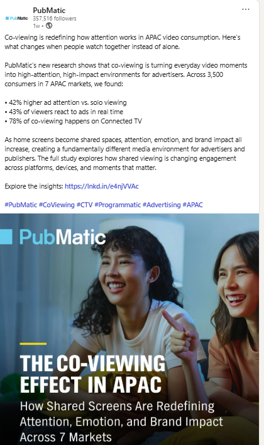
Launched the report on the PubMatic website with an in-house pop-up, and managed the paid media mix across LinkedIn and YouTube, evaluating performance in real time to see where spend was working.
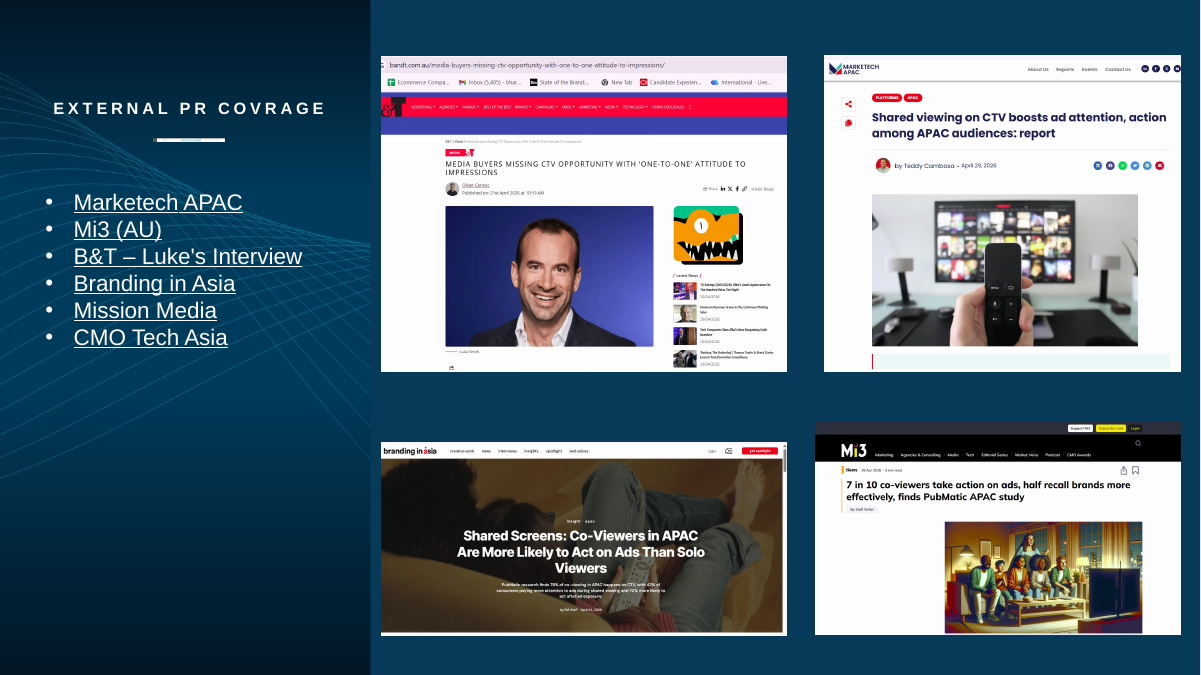
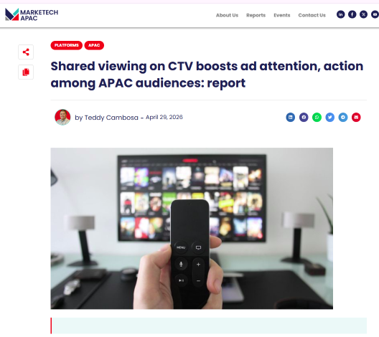
Coordinated earned and partner distribution: PR picked up organically with zero spend, and the AdNews partnership in India and Australia, which ran the ad and carried the report in its monthly newsletter.
Analyzed campaign performance end-to-end, from landing page traffic to lead quality to conversion to opportunity, to understand what actually drove pipeline versus what just drove clicks.
Channels
Results
The volume of top-funnel traffic was strong, but the drop-off from views to qualified leads was the real signal. It's what led to the strategic insights below, and what I'd fix first if I ran this again. And that one conversion mattered more than it looks: in ad tech, new accounts start with a few dollars and grow spend year over year. For a report built as thought leadership, a first deal is a big deal.
Strategic read
01Paid budget was misallocated.
YouTube consumed a disproportionate share of the paid budget without a matching return in qualified leads. That mattered because it left less budget for higher-intent channels like LinkedIn, where the audience was already primed to engage with B2B research content.
Next time: weight paid spend toward LinkedIn from the outset, and treat YouTube as a smaller brand-awareness play, not a lead-gen channel.
02Organic stakeholder reach went untapped.
Regional stakeholders had their own LinkedIn networks, exactly the senior, relevant audience this report was trying to reach, but they weren't asked to promote the report personally. Organic posts from real people inside the industry typically outperform brand posts for trust and engagement.
Next time: build stakeholder amplification into the campaign plan from day one, not as an afterthought.
03External partners were directed instead of consulted.
The team told an external media partner exactly how to run the promotion, a two-week website placement, rather than asking the partner what would work best for their own audience. Partners who understand their own platform's behavior usually have sharper instincts than a set of instructions handed to them.
Next time: bring partners in earlier and ask them to propose the approach, not just execute a brief.
04Timing competed with industry attention.
The report launched during a major industry event week, when the whole market's attention was pulled elsewhere. Even strong content underperforms when it's fighting for share of attention against a bigger, louder moment.
Next time: map the regional event calendar before locking launch dates.
What I'd do differently
If I ran this again with full authority over the plan, the first thing I'd change is the paid budget split. Shifting spend from YouTube to LinkedIn and stakeholder-driven organic reach would likely have moved the needle on lead quality more than any other single decision.
Project visuals